Artificial turf can be an effective choice for Arizona yards, but it isn’t as maintenance-free as many people think. With our summer sun, dust, wind, monsoon storms, and everyday use by people and pets, synthetic grass still needs regular care to look its best. In Arizona, the process focuses on preparing the ground to handle heat, hard soil, and occasional rain.
Josh Murray of Arizona Turf Professionals, a Rosie on the House Certified Partner, shares what homeowners should know about choosing, installing, and maintaining artificial turf in the desert climate.
First, the install
Murray calls installation a “base and drainage project.” The turf itself is the final layer. Heat, hard soil, and heavy rain create conditions you need to consider beforehand.
“The yard that still looks right in year eight is the one that was graded, compacted, and approved before the turf was rolled out,” he says.
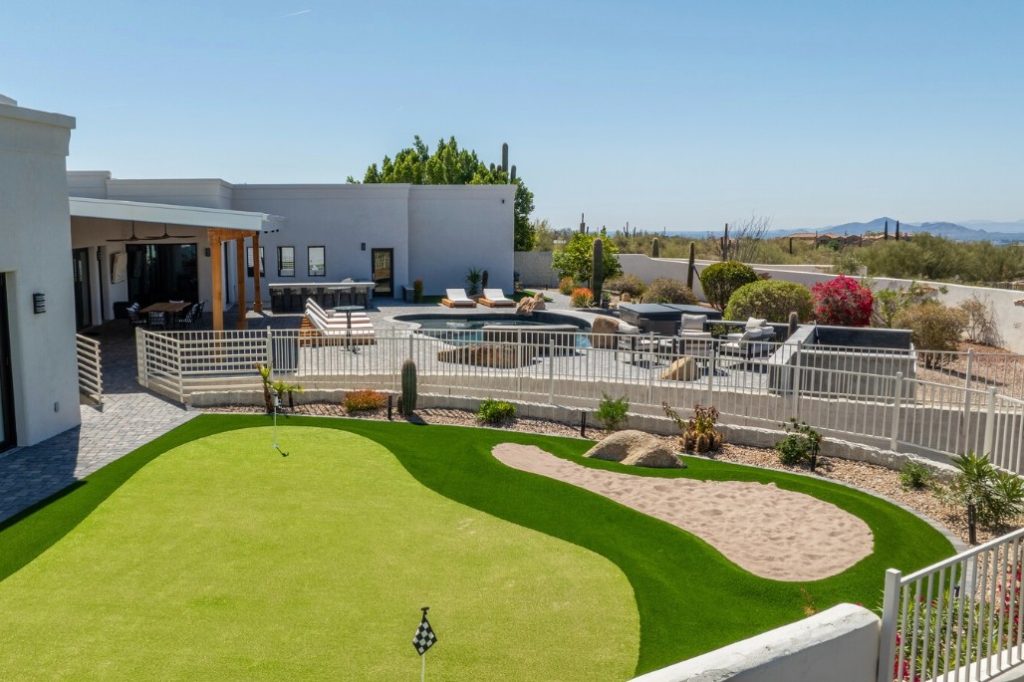
The first step is a site visit to determine how much area will be covered and how the space will be used. A front yard, backyard, pet run, putting green, and commercial property can all have different turf requirements. The installer also evaluates the existing grade, irrigation, soil, access for hauling materials, and how much shade or direct sun the area receives.
Those details can influence the turf, yarn, and infill you choose. For example, a west-facing yard that gets direct afternoon sun has different demands than a shaded courtyard.
A note on HOA requirements
For homeowners in an HOA community, get approval before removing the existing landscaping. Typical residential artificial turf generally does not require its own building permit. However, projects involving grade changes, new-build landscape plans, or drainage that affects a neighbor or right-of-way may require review.
Murray said that HOA requirements vary, but an application may request a site plan showing square footage, a turf product specification sheet, a sample, edge details, drainage information, and the infill type. Some associations also restrict certain materials or require specific front-yard appearance standards. Approval can take one to two weeks, so homeowners should not assume they can begin a project immediately after choosing a contractor.
Preparing the ground
Murray shares the steps that it takes to produce a lasting, finished product:
Once approvals are in place, the team removes existing grass, rock, or failed turf. The organic layer beneath it also needs to come out.
Leaving roots or old soil in place can lead to settling later, which can lead to open seams. Irrigation serving the turf area is typically capped or rerouted. Lines supplying nearby trees and plants can remain in operation.
Arizona’s soil can present another challenge. Caliche and tight clay can create a hard, cement-like layer under the surface. The installation crew has to work through or around those conditions so the finished base can drain properly.
Grading and drainage are vital. Murray says the subgrade should slope consistently away from the house and toward a safe outlet. Low areas may require additional base material or a drain. Prep matters because Arizona’s rain patterns are unpredictable.
The state may go through long dry periods and then receive a large amount of water in a short period of time. A flat base or a slope toward a home’s foundation can cause standing water and drainage problems.
Building a stable base
After grading, a permeable geotextile fabric is installed to keep soil from migrating into the base and slow weed growth.
Crushed aggregate or decomposed granite is installed in layers. Each layer is watered and compacted before adding the next. Proper compaction matters because a soft or poorly prepared base can eventually cause the turf to wrinkle or shift. The grass is the last thing that goes down.
“Edges are also prepared so the finished turf will sit flush with surrounding pavers, concrete, or existing grade. An edge restraint or nailer board can help keep the perimeter secure and prevent curling,” Murray said.
Once the base is ready, installers can lay out the turf. Installers position rolls with the blades facing the same direction, generally toward the main viewing area. Installers join and secure seams, then stretch and fasten the material so it is less likely to shift or separate as temperatures change. Edges are also secured around the perimeter.
Then, infill is distributed across the surface and worked into the turf with a power broom. In addition to helping the blades stand upright, infill supports the fibers and helps protect the backing from UV exposure.
Pet areas may require particular attention to the type of infill and backing used. The goal is to allow water to drain rather than creating a surface that holds onto odors.
Once installation is complete, the area is cleaned and inspected. A walkthrough should cover seams, edges, drainage, and basic upkeep. A typical residential installation can take 1 to 3 days once materials and approvals are ready. Access, the condition of the existing yard, and the amount of demo can affect the timeline.
How heat affects artificial turf
One of the biggest challenges with turf are the combination of sunlight and extreme summer temperatures. Unlike natural grass, artificial turf doesn’t cool itself through evaporation so that the surface can get much hotter than the surrounding air.
A short hose rinse can help cool the surface when temperatures climb. Homeowners can also consider adding shade in areas where people and pets spend the most time. Regular brushing is another important part of keeping turf looking natural.
High-traffic areas and walkways can become matted over time, so brushing helps lift the fibers. It is also important to keep infill at the proper depth. Thin areas can be more susceptible to matting and other problems. One shortcut to avoid, according to Murray, is covering the yard with a tarp.
Monsoon season creates another set of maintenance matters. Strong winds can bring branches, leaves, and other debris into the yard; heavy rain can move dirt and infill. Storms are also a good opportunity to check the turf edges and see whether infill has shifted.
Homeowners should also watch for standing water. Artificial turf does not eliminate drainage concerns, and recurring puddles can indicate a problem with the underlying base or drainage system.
During cooler weather and sunny days
The fall and winter months generally require less rinsing and brushing, but they provide a good opportunity to handle seasonal maintenance.
“Off season is a good time to clear leaves, brush matted areas, top up thin infill, and check seams before the next monsoon season,” Murray says.
Looking over seams before the next round of extreme weather can also help uncover potential problems while they are still relatively easy to address. Homeowners choosing artificial grass for a yard with significant direct sunlight should consider how the product is designed to handle long-term UV exposure. Long-term sun can slowly fade fibers and make them less springy, especially if the surface stays dirty.
Murray recommends looking for turf with UV stabilizers and a written warranty. A properly draining base is also important, particularly in an area that might receive a lot of rain.
The infill matters as well. Murray recommends sand or a cooling infill, while lighter blade colors can work well in full-sun areas. Shade can help control temperatures. Rather than expecting artificial turf to stay cool in extreme heat, homeowners can focus on where shade matters most for people and pets.
Tip- A good warranty for turf offers 15 years on material and 2 years on labor.
How often should artificial turf be cleaned?
Artificial turf does not need to be cleaned every day, but routine maintenance might prevent small problems from becoming bigger ones. Arizona Turf Professionals, offers an approved cleaning product called Arizona Turf Cleaner and Deodorizer.
During Arizona’s dusty and windy seasons, Murray recommends blowing off debris weekly or after a dust storm. You can also rinse dusty areas every week or two during spring and summer.
Brush about once a month with a power broom, with high-traffic paths getting more frequent attention. Pet owners should remove waste promptly and rinse those areas.
For most yards, a yearly deep clean is enough. Regular debris removal, occasional rinsing, and brushing can handle much of the maintenance between those deeper cleanings. A professional yearly steam cleaning is highly recommended.
Some of the biggest mistakes Murray sees include using metal rakes or high-pressure washing, as well as using bleach or harsh cleaners. Leaving pet waste and accumulated dust on the turf can also create unnecessary problems. Neglecting to brush the fibers can allow busy areas to become matted.
Homeowners should also consider what they place on the surface. Hot grills and heavy furniture can damage or flatten turf. The goal is not to treat artificial turf as completely maintenance-free. Understand that the product has its own maintenance needs, and that Arizona’s climate makes proper installation and seasonal care especially important.
Ask the right questions.
Before signing a contract, homeowners can ask a few basic questions to better understand what’s included in the installation.
Murray recommends asking how many inches of base will be installed and how many lifts will be used for compaction. Homeowners should also ask where water will go during a storm and request the turf’s face weight, UV warranty, and infill type in writing.
It is also worth asking who handles the HOA paperwork and whether the contractor waits for approval before beginning demolition. Homeowners should confirm the crew is licensed and insured and that haul-off is included.
If a quote focuses primarily on the price of the turf roll but provides little information about the base, drainage, or edges, that may be worth a closer look.
Artificial turf can reduce the mowing and regular irrigation associated with a natural lawn, but it still needs proper installation and routine care. The best results start underneath the grass with proper grading, drainage, and compaction, and continue with maintenance that accounts for the state’s intense weather. Learn more at arizonaturfprofessionals.com or rosieonthehouse.com.
Sign up for our weekly email newsletter to stay up to date with weekly topics, pertinent YouTube Videos and more. Sign up at rosieonthehouse.com/newsletter/
###
CONTENT PARTNER | Arizona Turf Professionals

We specialize in helping clients increase the value and beauty of their homes by creating elegant outdoor living spaces. We create beautiful yard designs by listening to your landscaping needs. Our ultimate goal is to ensure that you are completely satisfied with the end result of your project.
PODCAST
PHOTO CREDIT
- Arizona Turf Professionals