
Homeowners are, unfortunately, accustomed to seeing utility bills climb. Between temperatures, increasing municipal water rates, and the extra irrigation needed to survive the summer, monthly water bills of $200 or more have become common in communities across the Valley. Although rate increases are unavoidable, another culprit often goes unnoticed: hidden leaks.
These problems don’t always reveal themselves with standing water or obvious damage. Instead, they quietly waste gallons of water while steadily driving up their monthly utility bills. That’s where PinPoint Leak Detection & Repair, a Rosie on the House Certified Partner, comes in.
Small leaks = big water bills
Most might imagine a leak as a burst pipe or flooded yard. In reality, the leaks that cost homeowners the most are usually the ones they never see. Many develop underground or inside plumbing systems where water can escape for weeks or months without attracting attention. By the time homeowners realize something is wrong, surprise: your water bill is shocking.
“When it comes to higher water bills, there are two simple scenarios,” PinPoint’s Ian Hanley said. “It’s either wasted water or a leak. Wasted water being that you know you’re using an overwhelming amount – more than you should. A leak is more out of sight, out of mind…you now know about it because you opened up your water bill and it is sky high.”
Hanley says summers create another challenge. As temperatures increase, homeowners increase irrigation schedules to keep grass, trees and plants alive. While that’s understandable, it’s also easy to accidentally overwater.
“In the summer months, people have a tendency to overwater their yards, trying to keep their plants and grass alive because it’s 110 degrees outside,” Hanley said. Cities typically allow residents to use more water during the hottest months, but only to a point.
Keep an eye out for warning signs.

Hanley encourages homeowners to become familiar with their property’s normal water use and to investigate anything that seems unusual.
“I tell our clients to decrease landscape run times in the winter, increase in the summer as your landscape dictates” he said. “Walk your yard, look for surface leaks around your property. If you get an alert from the city saying you have a leak or you’re using an abnormal amount of water, you need to look into it. Investigate.”
Fortunately, today’s water meters make identifying unusual usage easy. Hanley explained that around 10 years ago, the city would walk the neighborhood, lift the lid on the meter box, spray the lens, and manually read the glass dial.
Now, every meter in the Valley has a Wi-Fi transmitter that sends real-time data and stats to the city’s water treatment facility. They know exactly how many gallons you’re using per minute, hour, day. They’ll automatically notify homeowners when continuous water usage suggests a possible leak. If that happens, Hanley recommends doing a little homework before calling a professional.
“There are self-help videos online that will help homeowners troubleshoot the area the leak may be coming from,” he said. “Doesn’t mean that you’re going to know the exact area, but it’ll give you a general idea, and then you can bring the professionals in with computerized equipment to sure up the marking.”
Pools: one of the biggest hidden leak sources
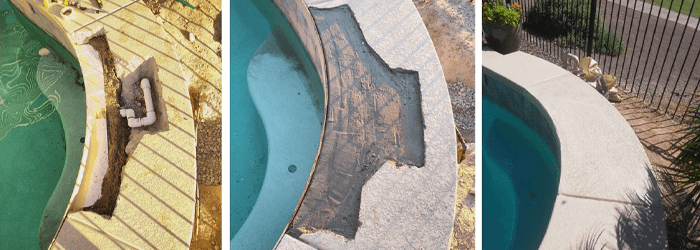
For Arizonans, the swimming pool is one of the largest water users on the property, and one of the hardest places to locate a leak. Because plumbing lines are located under concrete decking, leaks frequently remain invisible.
“You’ll know if there’s a pool leak because the autofill is constantly running,” Hanley said. “Your pool guy – if he’s a good pool guy – will let you know that your pool isn’t holding any chemicals and is burning through them quickly. Not holding salt can trigger a leak. Or if a client manually fills their pool, if they’re constantly filling, that’s a sign.”
Hanley estimates leaks are far more common than most people realize, stating that about 20 percent of pools in the Valley have leaks. How often are leaks responsible for unusually high-water bills?
“I’d say 50/50,” Hanley said. “Half of high-water bills are leak-related, half are overwatering and overconsumption, like long showers or long run times on the irrigation.”
Finding the source
PinPoint’s property water surveys are designed for homeowners who know something is wrong but have no idea where to begin.
“Let’s say you call me and say, ‘Ian, I have a high-water bill, but I don’t see any water anywhere! I have a pool, yard and home – where is this coming from?'”
The survey takes 20 minutes, and starts with shutting off the home, water, and pool.
“We open one valve at a time and measure it against the curb meter. We look at the meter. If it’s agitated and it’s spinning, the numbers are climbing, that’s a sign there’s a leak in that sector,” he said. “Then, we submit a report to the homeowner showing a general area of where the leak is located and a plan of action, further guidance of what else to test or what needs fixing.”
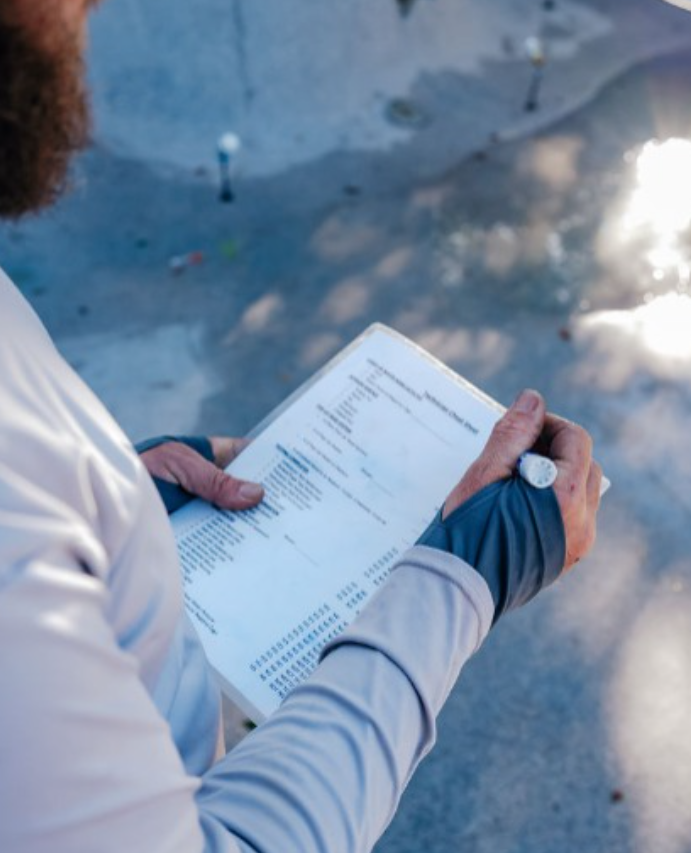
Hanley says many homeowners appreciate having a roadmap before committing to more extensive testing. Once the survey identifies the likely source of the problem, the team performs more detailed testing using specialized equipment designed to locate leaks without unnecessary demolition.
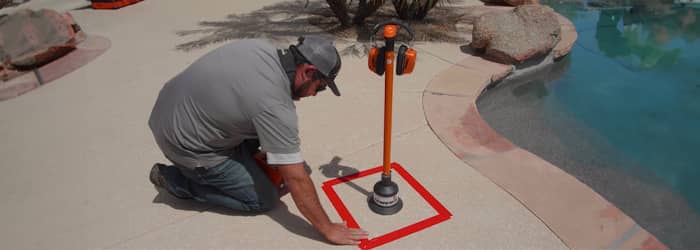
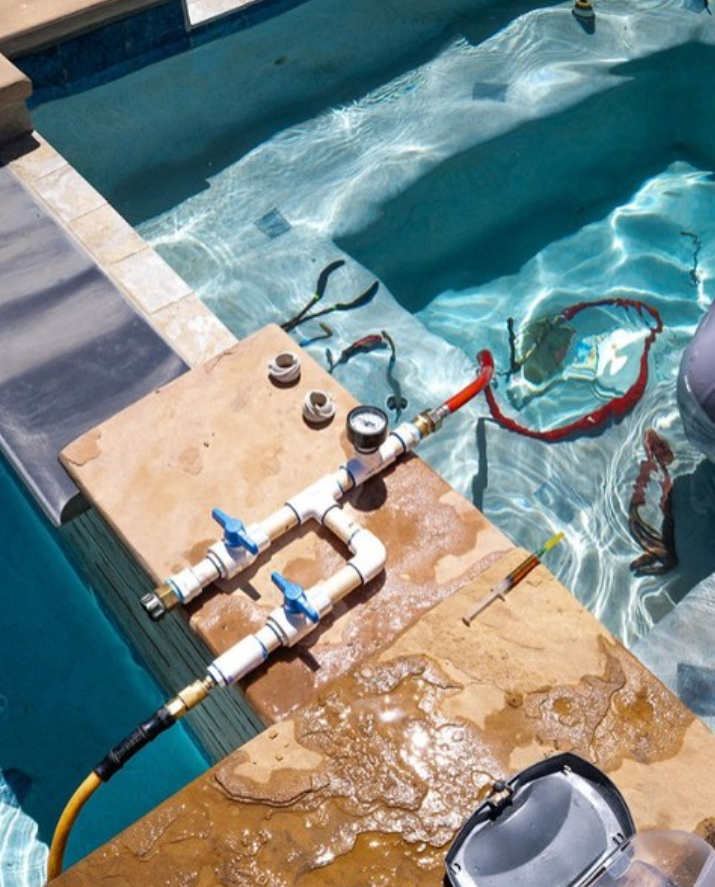
Depending on the situation, technicians may use hydrophone listening equipment, computerized leak analyzers, pressure testing, dye testing, electronic probes, and inspection cameras to locate the source.
The amount of time required depends entirely on the property. The pool can take three to eight hours, depending on the size, how many pumps and filters there are, and features and amenities.
Landscape irrigation systems require their own detailed evaluation.
“A standard lot includes the front and backyards, sprinklers, main line, heads, emitters, run times, etc.,” Hanley said. “We calculate a report basically stating how much the system runs per day, hour, month. Even if there isn’t a leak, we can provide that information to the family.”
Residential plumbing inspections include hot and cold-water lines, sinks, tubs, toilets, sewer system, RO lines and the water heater. Because testing can become extensive, Hanley often recommends beginning with the survey.
Different pricing options are available. If you don’t know where the leak is, you can start with a survey to help narrow down the area of the leak. Detection services are available for the home, irrigation, and pool.
Environmental effects
An elevated utility bill is often just the beginning. Water escaping underground can slowly erode soil beneath foundations, damage pool structures and create repairs that spread beyond plumbing.
“Your house could shift, lift or unsettle,” Hanley said. “We partner with Rosie Certified Arizona Foundation Solutions; they work side-by-side with us.”
Then there’s the environmental impact – Hanley stated that above all, we should want to be good water stewards.
“We all know we’re in a drought. We don’t want to waste any more water than we have to.”
The sooner you act, the more you save
Water rates throughout the Valley are expected to continue increasing, making every gallon – and every hidden leak – more expensive than ever.
A property survey can often point homeowners in the right direction, allowing professionals to focus testing where it’s actually needed.
Whether the issue turns out to be an overwatered landscape, a leaking pool line, or a plumbing problem beneath the home, identifying the source early may prevent larger repairs, reduce water waste, and significantly lower future utility bills.
###
CONTENT PARTNER | PinPoint Leak Detection
 Our mission is to accurately PinPoint water leaks to help you avoid inconveniences. We use state of the art technology to perform a variety of tests to locate the exact location of the leak. Once located, we use the necessary tools to fully repair any and all leaks. Because of our expertise, we stand out from other companies doing home/pool leak detection.
PODCAST
Small leaks can lead to big water bills. When it comes to higher water bills, there are two simple scenarios. Either its wasted water or a leak. Wasted water being that you know you’re using an overwhelming amount. A leak is more out of sight, out of mind. Until you receive a high water bill. Ian Hanely of Pinpoint Leak Detection discusses what a property survey can uncover detecting complex pool leaks, irrigation and other plumbing issue around the home.
Broadcast Archive Page With Expanded Content
PHOTO CREDIT
- Istock
- PinPoint Leak Detection