
Keep Your Home Free from Water Leaks- Save Water and Money
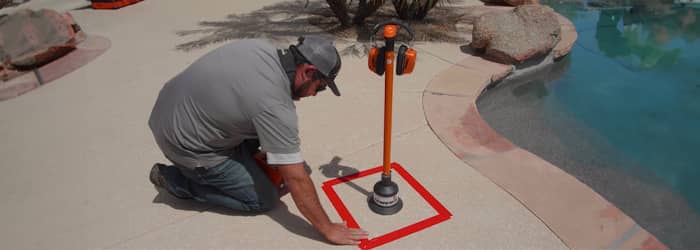
How do you know if you have a leak on your property? Of course, there is the obvious answer: you see water where it’s not supposed to be. But what about the not-so-obvious? Recently, we had a customer who didn’t know they had a leak, but they were concerned about their high-water bill. We recommended Ian Hanley of Pinpoint Leak Detection & Repair to track down the problem. After extensive searching, they found a leak costing the homeowner about 700 gallons per month.
Ian offers some tips to all homeowners to help them track leaks on their property:
Read Your Water Bill
Your monthly bill is a great place to start. There are a few tell-tale signs to be on the lookout for.
- Water Usage Changes: If your water bill goes up unexpectedly, you may have a leak. We’re not talking about the seasonal fluctuations in your bills, but rather the changes in your month-to-month consumption.
- Year Over Year: While summer water use typically rises, pay close attention to year-over-year usage. Your utility company includes comparison graphs that show changes in usage.
- When To Be Wary: For an average home in our desert areas, say 2400 square feet with a two-car garage on a third of an acre, Ian tells us your water bill is likely to be about $100 to $200 per month. If the bill is higher than that, you need to be wary.
Be careful not to fall into the ‘well, I guess it’s nothing’ trap. Water is too precious a commodity to waste, and we all work too hard for our money to waste any of it.
Look for Leaks
Irrigation Systems
Checking your irrigation system, particularly in the summer months, can catch a leak before it wastes water and costs you money. Here are some of the things to look for:
- There is standing water around the yard where there are no plants. A puddle or just a muddy, damp area indicates a potential hidden leak.
- A wonky emitter that is over spraying or spraying like a fountain. Check each emitter for proper flow. A missing emitter can waste water. A plugged emitter can lead to a plant not getting water. Neither of these scenarios is acceptable. If you notice a plant that is in distress, that might be a sign of a plugged emitter or a leak in the line before the water gets to the plant.
- Valves that aren’t closing properly. Broken lines and missing emitters aren’t the only potential sources of a leak. Valves can leak due to incorrect closure, a faulty diaphragm, or simple calcification buildup in the mechanism. The way to check for this type of leak is when the system is supposed to be off. Look at emitters down the line, and if any water is coming out, a faulty valve is likely to be the cause.
*Tip: Be sure to change your irrigation system to the proper watering schedule for the season.
Pools
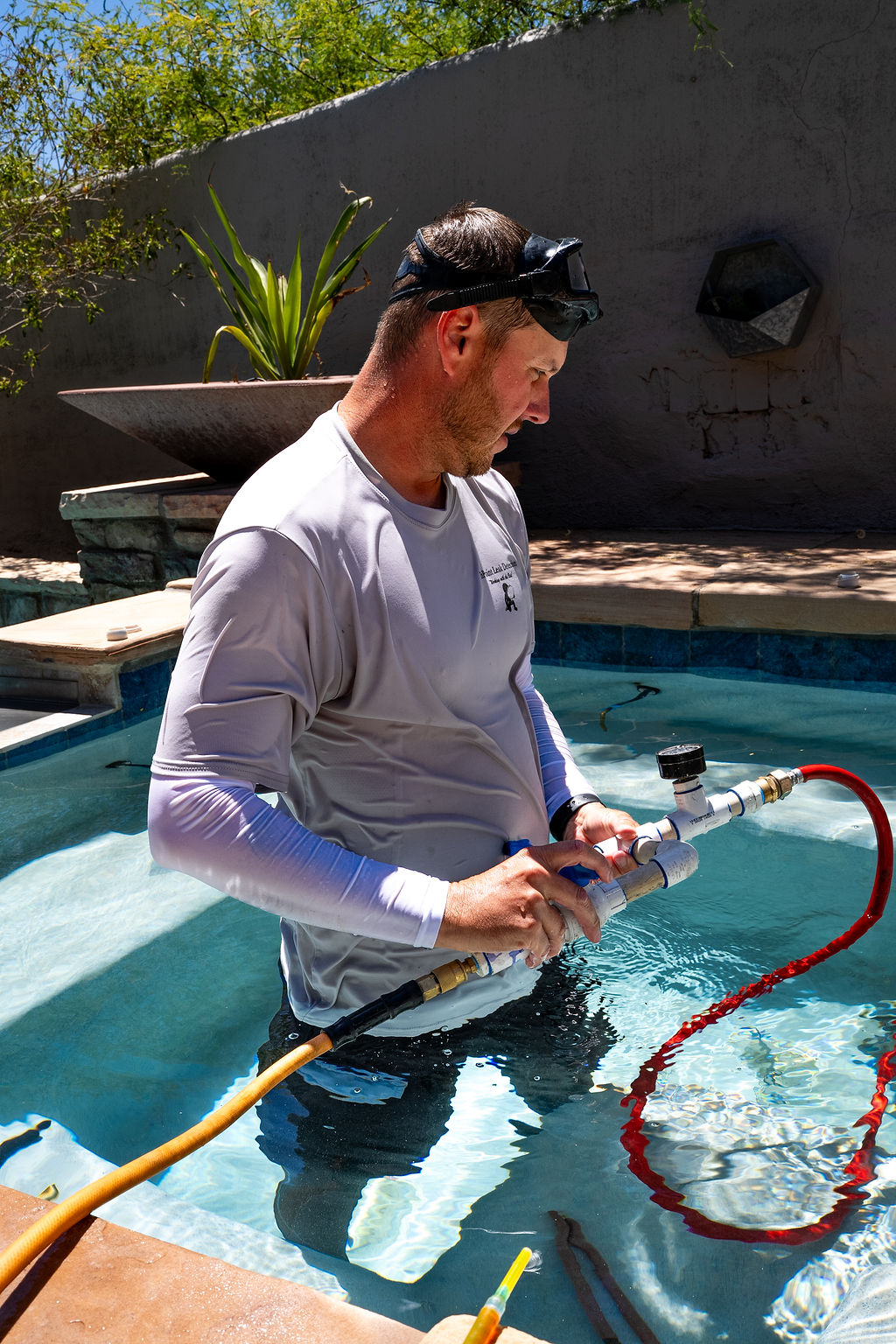
Unless you see water where it’s not supposed to be, pool leaks can be tricky. If you don’t see the results of a leak, you may have noticed your water bill is out of line with the norm for your home usage.
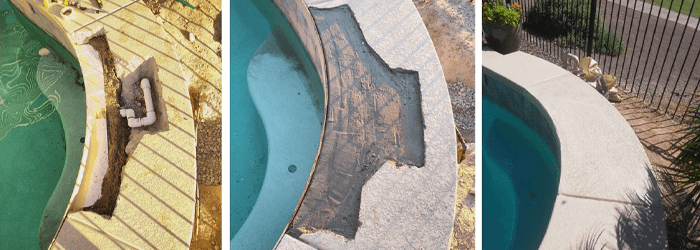
You might notice the pool filling up more frequently or having lower water levels. However you pick up on the clues, don’t wait to have the leak repaired. Ian told us clients often wait until the end of pool season to have the leak found and fixed as they are concerned about having to drain the pool to fix a leak. Ian assured us that in most cases the pool doesn’t need to be drained, and repairs often do not interfere with the pools use.
So don’t put off the repair, as you could be saving a lot of water.
House
Plumbing leaks in your home are often easy to see. A pipe dripping under the sink, wet wallboards, or wet and spongy flooring are all clues to locating a leak.
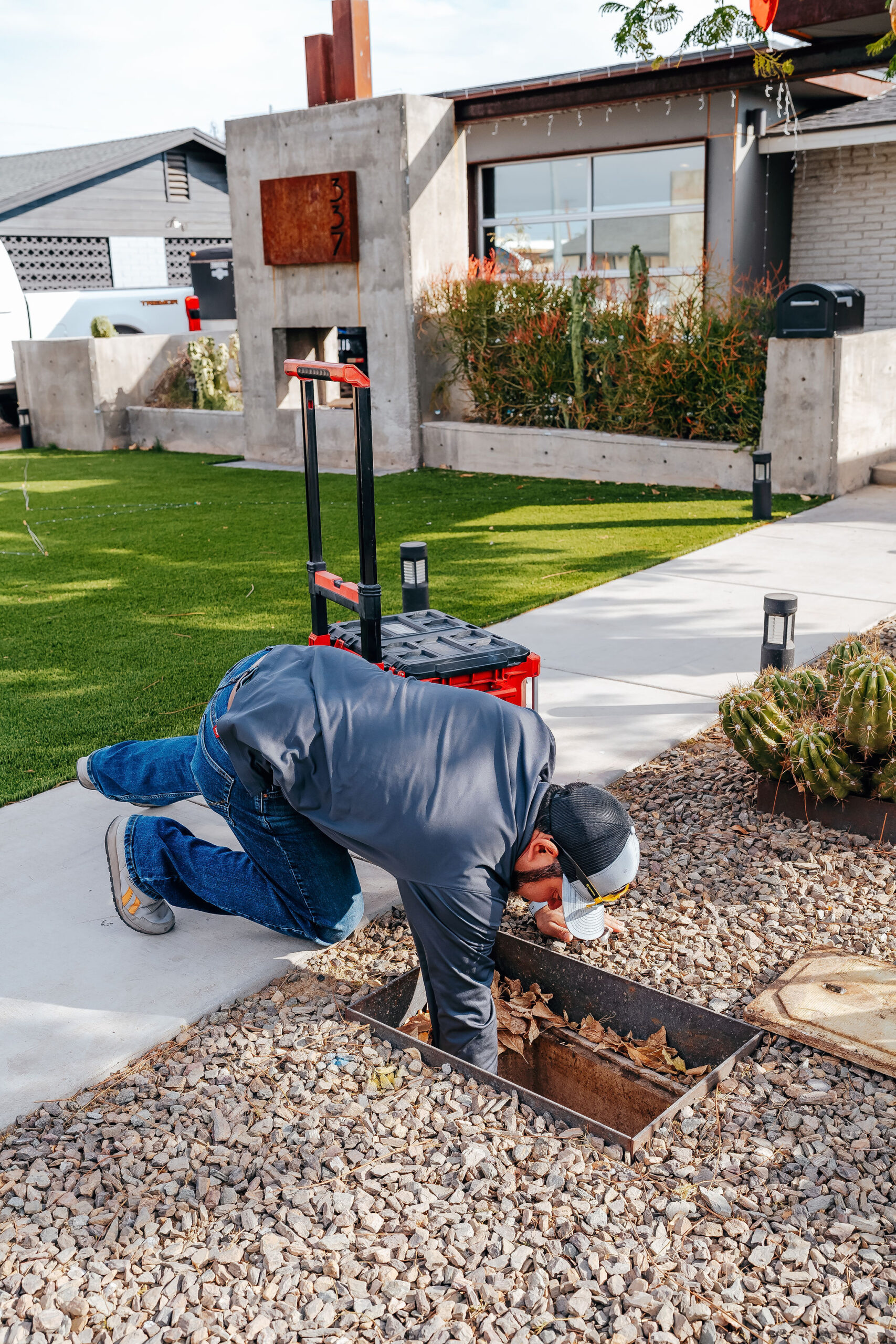
When you discover your water bills are way too high and can’t see any leak, that is when Ian tells us things get tricky. He tells us there are several ways to isolate the plumbing in our homes, which can help when repairing a leak.
Start by shutting off every faucet, angle stop in the home. Include the water heater and any water softeners you might have. If the main meter is still running, even a little, you have a leak somewhere. Ian said the leak might even be in the main line entering your home. If the source is not obvious, then the sleuthing begins.
Whole Property Survey
Knowing your typical water usage is key to knowing when you might have a leak. Smart water meters measure your typical usage, and if that falls out of your standard range, the city should let you know.
There is a benefit to having a whole property survey done even if you do not suspect a leak.

The survey process involves testing each system separately. That would be the house, the pool, the main line, and the landscape irrigation systems. Turn them all off and then see which system is causing the meter to move. Once isolated, repairs can be made and water saved.
The survey is worth it. The irrigation system info is especially helpful as it shows how much water you are using outside, and it may just be the info needed to change and manage your water usage.
###
CONTENT PARTNER | PinPoint Leak Detection & Repair

Whether you suspect you have a pool leak or a slab leak, we know what a headache either one can be. Let us save you the stress of contacting multiple companies and do it all for you. At PinPoint, we are fully licensed, bonded, insured, and our leak detection phoenix techs all have over 10+ years in the business. We guarantee our work and wont stop, until not just one, but ALL leaks are found.
PODCAST
High water bill? Likely some leaks you can’t see or hear. Ian Handley of PinPoint Leak Detection discusses what they can find with a property survey of your supply lines, irrigation systems and sonar detection for pools. Pinpoints the problems without the guessing.
Original Broadcast Archive Page With Expanded Content
PHOTO CREDIT
- PinPoint Leak Detection & Repair