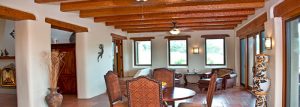

For homeowners of Pueblo and Santa Fe-style homes, the iconic viga is more than just an architectural feature – it’s a defining element of the design. These peeled logs, often protruding from stucco walls, give homes their unique Southwestern charm.
As picturesque as they are, the traditional wood vigas come with a hefty price as they age in the form of rot, pests, maintenance, and the risk of dangerous falls. That’s where Fiberspan Concrete Vigas, a Rosie on the House Certified Partner, comes in.

“I invented Fiberspan Concrete Vigas when I built a home for myself in Lake Montezuma about 20 years ago,” Founder Phil Bigelow said. “All other viga replacement options are made of materials like fiberglass resin, urethane foam, polystyrene, and wood. All these materials require regular maintenance and don’t generally last more than eight to 10 years.”
A viga is a small portion of a round log that has one of two purposes. It either supports the roof structure or is purely decorative. Traditional Santa Fe or Pueblo-style homes often feature these logs protruding from exterior stucco walls, creating a rustic, handcrafted look.
Unfortunately, wood is vulnerable. Over time, it deteriorates due to factors such as sun exposure, rain, termites, and temperature fluctuations. This wear leads to potentially hazardous situations, including falling vigas, rot infiltration into stucco and drywall, and a near-constant need for maintenance.
With decades of experience in both construction and mold making, Bigelow took a creative leap. Using his own knowledge, he made a flexible rubber mold of an actual wood viga. From that, he cast the first 10 concrete vigas for his home. The result was a product that looked identical to real wood – but was more durable.
“Old, decaying wood vigas can be a hazard to people and property for two main reasons. They can split and fall to the ground without notice, potentially hurting someone or their pet or damaging a vehicle,” Bigelow said. “One of the biggest reasons that homeowners love our vigas is that they no longer need to provide yearly maintenance.”
The second reason they are a hazard is that the rotting wood allows air and water to infiltrate the walls of the home making conditions conducive to pests, mold, and decay.
And finally, Getting up on a high ladder to apply caulk or sealer to an aging viga is complex, cumbersome, and potentially dangerous. Replacing older vigas with Fiberspan Concrete Vigas eliminates those risks and concerns.
“One of the biggest reasons that homeowners love our vigas is that they no longer need to provide yearly maintenance.”
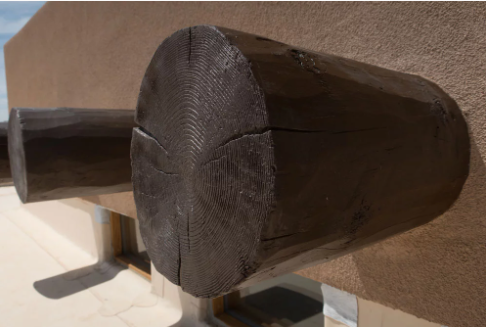 Fiberspan’s vigas are hollow castings made from a reinforced cementitious composite. They weigh about the same as real wood, which makes them easy to lift and install. But unlike wood, they’ll never rot, warp, or split – no caulking, sealing, or repainting required.
To capture and produce vigas that look absolutely real, Bigelow and his team start by making a flexible rubber mold over an actual wood viga. The rubber is applied in layers over multiple days until a proper thickness is achieved. After the rubber mold is dry, a hard (what they call a mother mold) is then made over the rubber mold to create support for the flexible rubber mold. Once the mold is complete, it’s removed from the wood viga (prototype).
“First, the rigid mother mold is pulled from the rubber mold, and then the rubber mold is peeled away from the wood viga,” Bigelow said. “We are left with a mold that has picked up every detail of that wood viga. Even the tiniest chip, wood grain, and nuance is replicated with this method.”
Fiberspan offers standard color choices in dark brown and medium pine, both designed to mimic popular wood finishes. However, if you’re going for a specific look, custom colors are available. Just provide a color code, and Fiberspan will match it, ensuring the new vigas blend seamlessly with your home’s existing aesthetic.
The company also manufactures canales, which are traditional roof scuppers used to drain water from flat roofs – another essential feature in Southwestern architecture. Faux headers are also available to complete the look of a classic Santa Fe home.
Just like their vigas, these elements are built to last and require no ongoing upkeep.
A Better Alternative to the Alternatives
While there are cheaper alternatives on the market – like urethane foam, fiberglass, or plastic-coated wood – none offer the same level of realism, durability, or peace of mind.

“There are cheaper options out there, and none of them can guarantee ‘no maintenance’,” Bigelow points out. “Fiberspan Concrete Vigas will stand behind their vigas for as long as the customer owns their home.”
And unlike solid concrete, which can be heavy and unwieldy, Fiberspan’s hollow design ensures a manageable weight without compromising on strength. That makes installation easier for both contractors and DIY homeowners.
Why Homeowners Shouldn’t Just Stucco Over Decaying Vigas
Some homeowners, faced with the expense or effort of replacing old vigas, opt to remove them entirely and stucco over the holes. While this solves the maintenance issue, it dramatically changes the home’s aesthetic – often in a negative way.
“Most homeowners choose not to use this option. It dramatically changes the appearance of the home and is not usually considered an improvement,” says Bigelow.
Replacing old vigas with Fiberspan allows homeowners to retain the beauty of their home’s traditional design without the downside of future repairs.
“Fiberspan Concrete Vigas are the last vigas a homeowner will ever buy,” Bigelow affirms. “They will never have to climb on unsafe ladders to caulk or paint ever again.”
What began as a DIY solution for a single home in Lake Montezuma has grown into a trusted, Arizona-based business serving homeowners and contractors across the Southwest. With a product that combines visual authenticity with long-term performance, Fiberspan Concrete Vigas is redefining what it means to own and maintain a Santa Fe-style home. To learn more, visit fcelements.com or rosieonthehouse.com.
###
CONTENT PARTNER | FIBERSPAN CONCRETE ELEMENTS

PODCAST
Guests from Fiberspan Concrete Elements discuss their innovative lightweight concrete vigas that replace traditional wooden vigas on Pueblo style homes. Durable, realistic wood grain fools even the professionals. Also make door and window headers and scuppers that are constructed to last. Plus a homeowner has moisture damage on her home balcony.
Broadcast Archive Page With Expanded Content
PHOTO CREDIT
- Fiberspan Concrete Elements