


Arizonans know that monsoon season has a way of revealing problems that stay hidden the rest of the year. A downpour can send homeowners scrambling for towels when they notice water around a window – but not every drop means your windows are failing.
According to Sal Sucato of DunRite Windows and Doors, a Rosie on the House Certified Partner, many families mistakenly assume any water inside a window track signals a problem, when in reality, modern windows are built to handle water in specific ways.
Know the difference and the warning signs
One of the biggest misconceptions about windows is that they’re supposed to keep every drop of rain out of the frame itself. They’re not.
“You might have water running down the glass on the inside of the home; you could have moisture or water on your windowsill; you could have discoloration close to the window frame in the window cavity,” Sucato said. “Those symptoms can indicate a leak, but simply finding water inside the window track isn’t necessarily one.”
Older aluminum windows, especially original single-pane or double-pane windows found in many homes, are designed so that rainwater enters the track before draining back outside through small openings called weep holes.
When water hits the exterior side of the window, it’s completely normal to see water collecting on the track from inside the home. As long as it’s not overflowing, that’s a natural part of how the window operates.
“That is not considered a water leak. It’s supposed to go out the weep holes and back outside – that’s how a window works.” The trouble begins when aging materials start to fail.
Over time, the sealant in the corners of older window frames can deteriorate. Instead of draining outside, water finds its way through those weakened corners and into the surrounding drywall.
Real leaks often leave subtle clues long before they become major repairs. According to Sucato, homeowners should pay attention to discoloration around the window frame, small cracks where drywall meets the window, or drywall that feels unusually soft or “crunchy.”
“Typically, you’ll see crunchy drywall in the corners of your windowsill,” he said. “Usually not too much because it’s a slow leak, but there will be some discoloration or drywall movement in the corners.”
Leaks don’t always stay near the window, either. Water can travel behind walls before showing itself elsewhere in the home. Noticing those early warning signs can prevent much larger repairs later.
“If the sealant where your baseboard meets the drywall is separating, there might be a leak,” Sucato said. “It might swell a little, too.”
Try the hose test
If you aren’t sure whether water is coming through the window itself or through the wall surrounding it, a simple garden hose can provide valuable clues.
Many newer homes are built with a water-management barrier hidden behind the stucco. This moisture barrier helps direct water safely around windows and back outside before it ever reaches the home’s framing.
“You should be able to spray your house with a hose, and that water should hit the window, roll to the side and roll all the way down,” Sucato said.
However, homes built before 1999 often lack that additional moisture barrier. Without it, rainwater that penetrates stucco can travel behind the exterior finish and down the framing of the home. While every home is different, spraying sections of your exterior with a hose can sometimes reveal where water is entering.
“If you see the house absorbing any water – if you see cracks getting darker or the paint changes color – that is showing you the stucco is absorbing the water, making its way to the window and finding its way into the house,” he said.
Maintenance matters
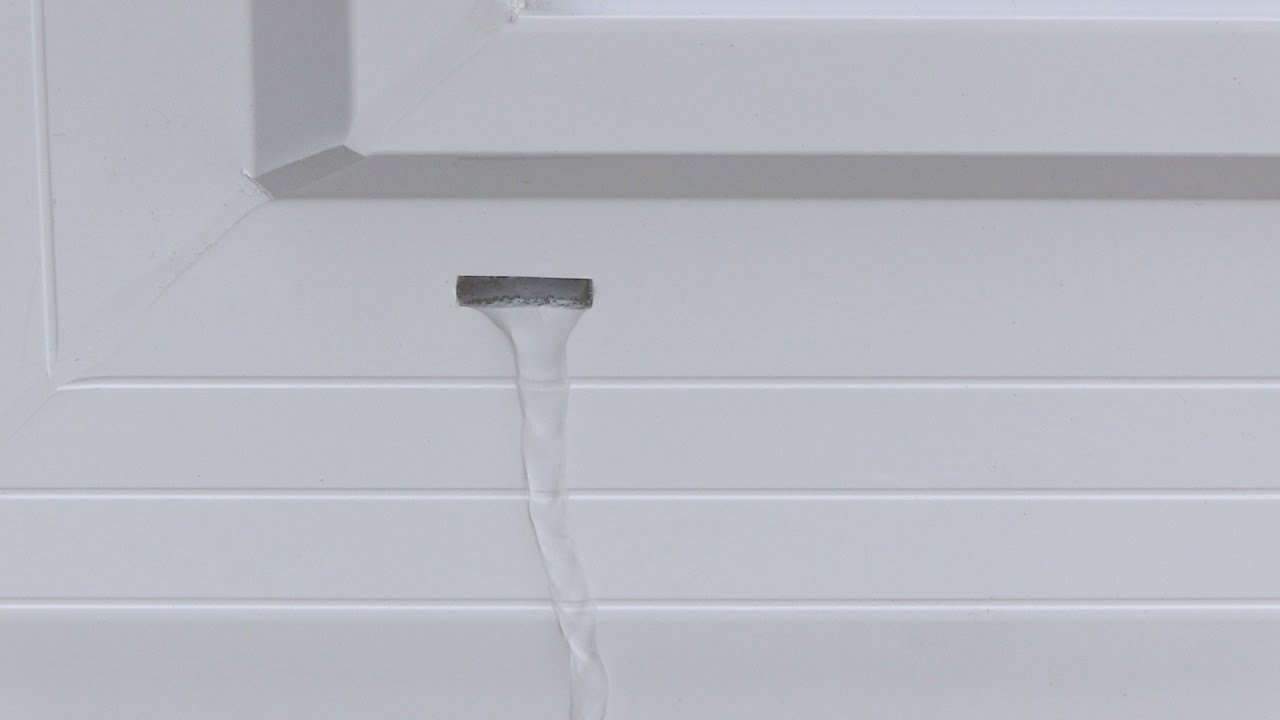
Fortunately, preventing many window-related issues won’t require specialized tools. One of the easiest maintenance tasks homeowners can perform before monsoon season is making sure their window drainage system is functioning properly.
“Almost all homes are developed with a weep hole system,” Sucato said. “It’s going to trap the water and redirect it outward.”
He recommends cleaning the window tracks and testing the drainage system before heavy rain arrives. Take a pitcher of water, open up the window, pour water into the track and let it fill up, and watch it go out the weep holes on the exterior.
If the water doesn’t drain, the weep holes may be clogged with dirt, paint, or debris. Keeping those openings clear allows the window to do exactly what it was designed to do. Some homeowners accidentally create leaks while trying to stop them.
“During a storm, we’ll get calls from customers saying the window is leaking,” Sucato said. “They saw water in the track, so they put a towel down to soak it up. Trouble is, that water is supposed to be there. The towel wicked it onto the windowsill and into the drywall. They accidentally created water damage, but it isn’t a leak.”
Another issue occurs after repainting. Blocking those drainage openings traps water inside the frame, boosting the probability of moisture damage.
“Some customers will paint the weep holes and fill them with caulking, so their windows will never drain water,” Sucato said. “Don’t do that.”
When repairs aren’t enough
For homes without modern moisture barriers, addressing the root cause can become expensive. Installing today’s water-management system often requires removing exterior stucco and foam insulation down to the framing – a significant undertaking.
As an alternative, Sucato said some homeowners choose to apply an elastomeric wall coating to help reduce water penetration.
“The alternative option – and disclaimer, elastomeric paint may not work for everybody – but sealing the exterior stucco to create a surface barrier system means the water doesn’t penetrate the stucco,” he said. It helps seal small cracks in the stucco while creating a more water-resistant exterior surface.
The energy upgrade
While leak prevention is important, replacing aging windows offers benefits homeowners notice every day – not just during storms. Energy efficiency is at the top of that list.
The difference in numbers between older windows and today’s technology might be shocking.
“For example, older single-pane aluminum windows would block out somewhere between three to eight percent of the heat. Today’s windows block out about 85 percent of heat, and 99 percent of the UV. It’s a massive improvement.”
That kind of drop means cooler indoor temperatures, less strain on air conditioning systems and significantly better UV protection for flooring, artwork, furniture and fabrics.
“You could suntan behind those old windows,” Sucato laughed. “With modern technology, you should be able to touch your windows and feel room-temperature glass.”
Modern windows also create a noticeably quieter home.
“Customers say they feel like the windows are more secure,” he said. “That’s true, but it’s a direct result of the windows being quiet. Noise reduction is peaceful.”
If replacement is on the horizon, frame material and window style influence comfort and efficiency. Sucato said the most durable material for Arizona is fiberglass.
He also notes that while the difference is relatively small, fixed picture windows and casement windows tend to offer the highest energy efficiency because they create tighter seals than some other operating styles. Gliding windows tend to be the least energy-efficient operating style.
Stay ahead of leaks
Arizona’s monsoon storms test every opening in your home’s exterior. Fortunately, homeowners who understand how windows are designed to manage water are better equipped to recognize the difference between normal drainage and a true leak.
A quick inspection before storm season, cleaning weep holes, and attention to small warning signs like cracked caulking or discolored drywall can help catch issues early, when they’re typically easier and less expensive to address.
###
CONTENT PARTNER | DUNRITE WINDOWS AND DOORS
 At DunRite Windows & Doors, you’ll appreciate our reputation for high quality work and experienced employees who truly care about the installation process. We never use contractors.
My name is Sal Sucato. I’m a long-time Rosie-Certified partner who will personally make sure you have a five-star experience with my company. We’re a locally owned family business since 2001, offering reputable brands, a wide variety of options at a great price, with a solid, lifetime installation warranty.
PODCAST
Monsoon has a way of revealing problems that stay hidden the rest of the year. A downpour can send homeowners scrambling for towels when they notice water around a window. However not every drop means your windows are failing. Sal Sucato of DunRite Windows & Doors discusses the signs there is a potential leak and what could fool you in thinking there’s a problem.
Broadcast Archive Page With Expanded Content
PHOTO CREDIT
- Anlin Windows
- DunRite Windows & Doors


















Comments (1)
Viva Fenester
August 27, 2026 at 11:45 pmWindow leaks can lead to moisture damage, mold, and deteriorating walls if ignored. Watch for water stains, peeling paint, damp frames, condensation, soft wood, or musty odors around windows. Regularly checking seals, drainage paths, and surrounding walls can help identify problems early and reduce costly repairs.