
Living in Arizona has its perks: an abundance of sunshine, iconic sunsets, and diverse landscapes in all directions, but it also comes with its challenges – and this is when emergency preparedness comes into play.
With a little planning, your family can build a system to stay safe, comfortable, and well-supplied in any situation. Here’s how to prepare for four common emergencies in Arizona: monsoons, wildfires, power outages, and water disruptions.
Monsoon season
Arizona’s monsoon season – when it decides to make an appearance in the Valley – can turn calm skies into intense storms in a matter of minutes. Heavy rain, high winds, dust storms, and flash flooding are all part of the mix.
Here’s one important rule: when storms roll in, stay put. Flooded roads and washes are more dangerous than they appear, and it’s never worth the risk of trying to cross moving water. Even shallow currents can sweep a vehicle away.
Preventative maintenance matters.
Keep gutters and rooflines clear so water drains properly, and avoid pooling where you can.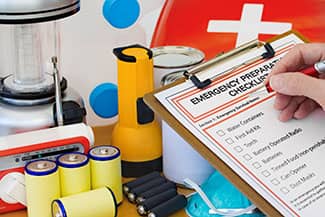
Inside, think about what you’d need if you had to shelter in place for a few days: food, water, lighting – a battery-powered radio can be useful when storms knock out power or cell service. Keeping a simple emergency kit in your car can make a huge difference if you’re stranded during a storm. Include water, snacks, a flashlight, a map, and basic supplies to ride out delays safely.
Review your insurance, as standard policies usually exclude flood damage from outside water sources.
- “From the lending side of things, we check every transaction to determine whether the property is in a flood zone. If it is, we require flood insurance for the mortgage. The required amount of flood insurance is based on the level of flood risk as determined by official maps,” Harold Perkins of Galaxy Lending said. “People can look up their property on FEMA’s website to determine if they are in a flood zone and find recommended coverage options.”
- From a realtor’s perspective, Vikki Gorman of Fathom Realty always encourages homeowners and buyers to understand that flood damage is typically not covered under a standard homeowners’ insurance policy. With our monsoon season and the potential for flash flooding, it is so important to review your coverage, understand your property’s flood exposure, and speak with a trusted insurance professional about whether a separate flood policy is the right protection for your home.
Wildfire preparedness
Arizona landscapes can quickly dry out as temperatures rise, which are unfortunately prime conditions for wildfire. According to The Insurance Institute for Business and Home IBHS.org,
- “Critical Prep identifies essential steps that work together to tackle the top causes of ember ignition. Wind-blown embers are the #1 cause of home ignition during wildfires. They can travel miles ahead of the fire front, starting spot fires on rooftops, decks, and landscaping that can overwhelm firefighting efforts. Your best defense is to be proactive. Effective wildfire preparation must be comprehensive, addressing every vulnerability – because embers will always find the weakest link.
- Create a secure space by installing a five-foot hard scape made of non-flammable materials, such as gravel or stone, and keeping plants trimmed.
- Your home itself also plays a role in fire resistance. Keep roofs and gutters free of debris, such as leaves and twigs, which can easily ignite. Installing ember-resistant vents adds another layer of protection by preventing wind-blown embers from getting into the attic or crawl space.
Make sure you have a plan! Know evacuation routes, establish a meeting point, and make sure everyone understands how to act quickly if needed.
*Rosie tip: Visit Wild Fire Prepared for detailed information and steps to keep your home safe.
Power outages
In Arizona, power outages aren’t just inconvenient. They are uncomfortable and can become dangerous during extreme summer heat. Planning will keep you safe.
- Start with lighting and communication. Flashlights, extra batteries, and a battery-powered radio should be readily accessible. From there, think about food and cooking. If your kitchen relies entirely on electricity, you’ll need an alternative cooking method.
- Portable propane or butane stoves are practical. A tabletop burner with backup fuel can handle basic cooking. Solar ovens suit Arizona’s climate, offering a fuel-free meal option.
- Bulk pantry items like rice, beans, pasta, and oats are affordable, adaptable, and easy to store long-term in airtight containers. Many homeowners use buckets or stackable systems to protect supplies from moisture and pests.
- For quick, grab-and-go meals, MREs (meals ready to eat) can be helpful, but they’re best used as a short-term solution. Keeping a week’s supply on hand is usually sufficient, while relying on bulk dry goods and freeze-dried foods for longer-term planning. Have can openers, utensils, and durable cookware available.
Water storage and safety
If there’s one resource you don’t want to run out of, it’s water. The human body can only go a few days without it, making storage and purification a foundation of any emergency plan.
A good baseline is to store at least one gallon of water per person per day. For a two-week home supply, that adds up quickly, so having a mix of storage solutions helps. Bottled water is convenient and portable, while larger options, such as stackable containers or barrels, are better for long-term use.
Think of “first needs” (drinking) and “second needs” (sanitation). Drinking water is the priority, but extra water for hygiene adds to health and comfort during outages. Store water in a cool, indoor space and treat it with purification drops to prevent bacterial growth.
When it comes to purification, there are several options. Boiling is one of the simplest and most effective methods. Portable filters – like pump filters or straw-style devices – are also useful, especially for emergency kits or outdoor scenarios.
For at-home use, gravity-fed filtration systems can provide a steady supply of clean water without electricity. Some systems can even filter treated pool water in extreme situations, offering a valuable backup when other sources aren’t available.
Keep in mind that there are water sources already in the home. Ice makers, water heaters, and even toilet tanks (not bowls!) can serve as emergency sources if needed.
Building an emergency kit
A well-stocked emergency kit should, at a minimum, include water, non-perishable food, a flashlight, a radio, batteries, a first aid kit, medications, and important documents.
Customize your kit based on your household: add baby or pet supplies as needed. Extras like clothing, work gloves, hygiene products, and tools are smart additions. Think of your kit as something that evolves. Start with the essentials, then build on them as you identify new needs.
When calling in reinforcements…
In an emergency, stay calm. Panic and yelling only make it harder for responders to help effectively. If you have to call a dispatcher, make sure to clearly provide your location, a short description of the situation, and any relevant medical details.
Accuracy matters – especially in rural areas – so include nearby landmarks if the exact address is uncertain. A helpful summary goes beyond general statements; for example, instead of simply saying there was a car accident, share how many vehicles and people are involved and whether anyone is injured, trapped, or ejected. Describing specific symptoms rather than broad terms can help emergency crews respond with the appropriate urgency and care.
Other tips to help you stay prepared
Once you’ve covered the basics, there are a few extra steps that can help step up your readiness for any situation. Rotate your supplies so food and water stay fresh, using bulk pantry items in daily cooking. Keep seeds on hand, even if you don’t have a garden yet. They store well and provide a long-term option to rebuild your food supply if needed.
If it piques your interest, small-scale gardening or raising backyard chickens can add another layer of preparedness – keep in mind that these also require their own planning, including water and feed storage.
The key is to make sure everyone in the household knows what to do in an emergency. Everyone should know where supplies are stored, how to use them, and what to do in different scenarios.
With a little bit of planning and communication, the right supplies, and a dash of maintenance, you can create a home environment that’s ready for whatever the season brings. And in a place where conditions can change quickly, that kind of readiness is one of the smartest investments you can make. Find more tips and tricks at rosieonthehouse.com.
“In Maricopa County, I always encourage homeowners and buyers to understand that flood damage is typically not covered under a standard homeowners insurance policy. With our monsoon season and the potential for flash flooding, it is so important to review your coverage, understand your property’s flood exposure, and speak with a trusted insurance professional about whether a separate flood policy is the right protection for your home,” Vikki Gorman of Fathom Realty said.
###
Homeowner Handbook | #EmergencyPreparedness
PODCAST
PHOTO CREDIT
- FreePik
- Istock