
In Arizona, water conservation is a priority, making water features a low priority when designing landscape layouts. In addition, the hard Arizona water will build up mineral deposits, increasing the need for additional care.
With that said, done the right way, water features can have many benefits to an outdoor living area. They provide a great ambient sound for your sitting area, especially if you are trying to camouflage noise like street traffic. They can have a cooling effect and help create micro-climates for growing conditions. They create a water source for birds and backyard wildlife. And they accomplish this with a fraction of the water that a pool, lawn or non-native landscapes require.
Why are water features appealing?
To put it simply: water is calming. The sound of a fountain can soften traffic noise, create a more relaxing environment, and add movement. In neighborhoods where gravel, cacti, and stucco dominate the landscape, water features also add contrast and texture.
Smaller water elements are becoming increasingly popular because they offer the atmosphere people want without requiring the scale or maintenance of a traditional pond or waterfall.
Designers often describe water as an “anchor” in outdoor spaces because it naturally draws attention and creates a focal point.
That emotional pull toward water is something Phoenix-area pond builder Paul Holdeman sees regularly through his company, The Pond Gnome.
“People vacation next to water. They go to the lake, the ocean, the mountains, rivers, and streams. We are drawn to water. The negative ions put off by moving water restore our mental health,” Holdeman said. “There is a cooling effect from the increased humidity. Even more amazing is the role that the sight and sound of moving water play in cooling the mind.”
Some of his clients even describe their water features as transformational gathering spaces.
“Unlike the TV, ponds promote conversation. Clients have told me their pond may have saved their marriage because conversation next to the pond is so much more natural than conversation in front of electronic entertainment,” he said.
Tucson-based rainwater harvesting expert Brad Lancaster encourages homeowners to broaden the definition of what a “water feature” can be. Instead of relying on conventional fountains, Lancaster recommends thinking in terms of living systems.
“A native tree is a living water feature,” Lancaster said. “It is a living pump, a living fountain of life-giving shelter, food, and shade.”
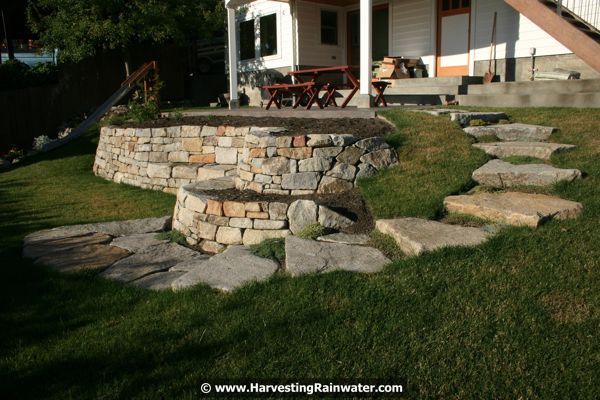
Lancaster suggests the use of a rain garden (a shallow hollow or dip in the ground that collects rainwater where native plants can grow). When anchored by native trees such as velvet mesquite or desert ironwood, a rain garden can provide many of the same calming, cooling, and visual benefits homeowners seek from decorative water features, while using less supplemental water over time.
Pondless fountains
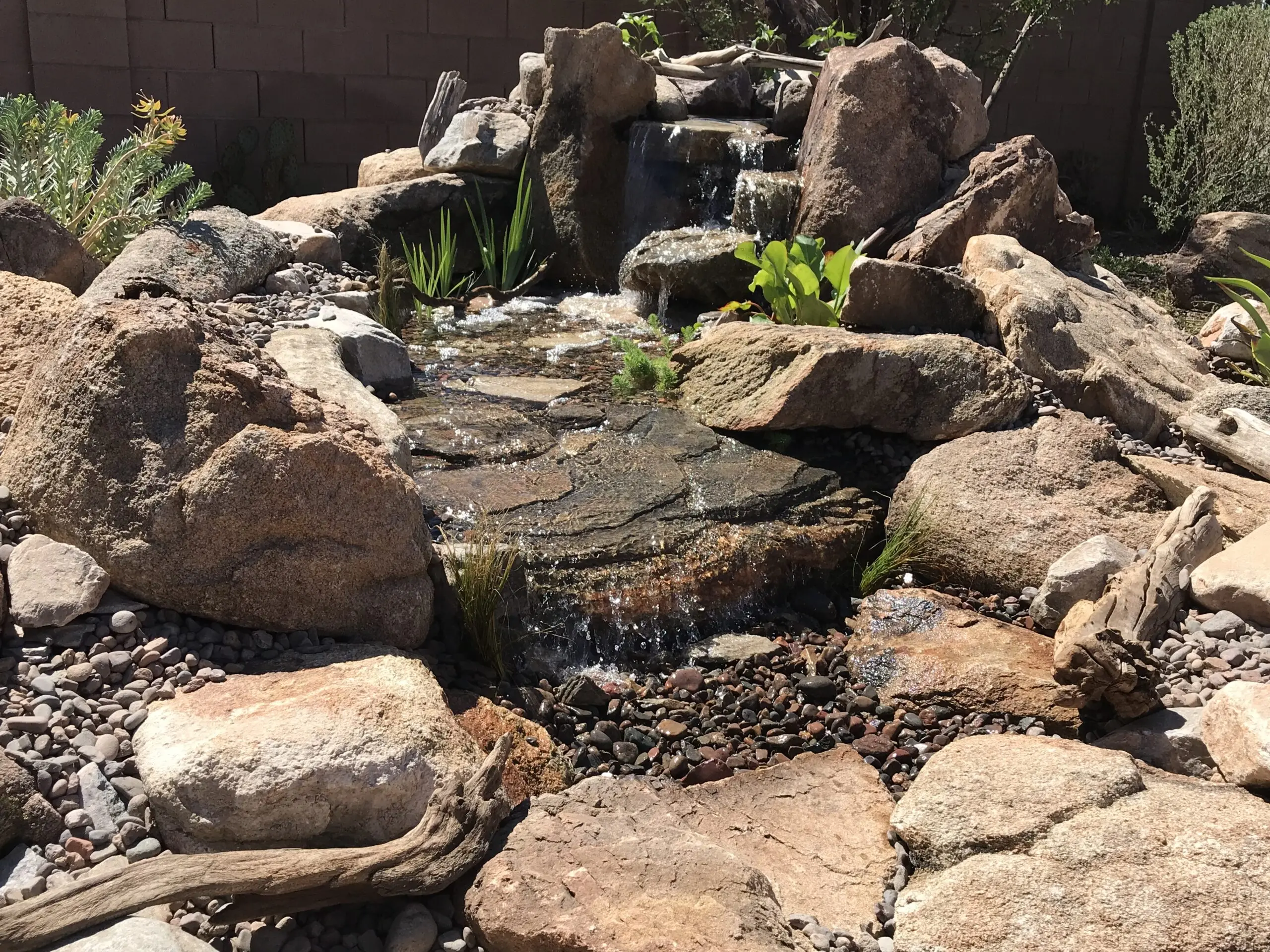
One of the most practical choices for Arizonans is the pondless fountain. Unlike traditional ponds, these systems recirculate water from an underground reservoir, eliminating the need for standing pools of water.
Pondless systems generally lose less water to evaporation because there is less exposed surface area. They also require less maintenance, attract fewer mosquitoes, and are often considered safer for households with small children or pets.
Pondless fountains come in a variety of styles, from natural rock formations to sleek modern columns and ceramic spillways. Some opt for minimalist bubbling stone features, while others choose multi-level fountain designs that create dramatic sound effects.
Another advantage is flexibility. Because these systems are typically smaller and more self-contained, they can fit into courtyards, patios, entryways, or narrow side yards where a full pond would not be practical.
For homeowners who want the sound and movement of water without maintaining an elaborate landscape installation, pondless designs are often the most efficient compromise.
Lancaster suggests reducing unnecessary evaporation by minimizing water surface area, avoiding splashing and spraying, and encouraging a mellow gurgle to reduce water loss. He warns that hotter and windier conditions increase evaporation.
Both he and Holdeman recommend researching placement for sustainability: choose shaded, wind-protected areas, and select a feature size that matches the site for long-term manageability.
The technology behind water features
Today’s residential water features are more advanced and are designed with efficiency, automation, and sustainability in mind, especially in climates where water use is under greater scrutiny.
Most contemporary water features rely on recirculating pump systems, meaning the same water continuously cycles through instead of pulling fresh water from a supply line. Variable-speed pumps have also become more common, allowing homeowners to reduce energy consumption by adjusting water flow depending on the season or time of day.
Some systems include automated water level sensors that monitor evaporation and prevent pumps from running dry. Others can be connected to apps that allow homeowners to control flow rates, lighting, timers, and filtration remotely.
LED lighting is another popular option. Underwater lights can create dramatic effects while using very little electricity. Many homeowners are incorporating programmable lighting systems that shift color or brightness depending on the mood or occasion.
Filtration systems have also improved significantly. Better filtration means cleaner water, reduced algae buildup, and less frequent maintenance. Filtration is particularly important in Arizona, where dust storms and debris can quickly affect outdoor features.
Still, technology only goes so far. Lancaster encourages homeowners to evaluate how their home’s layout, materials, and landscaping interact with weather conditions, rather than focusing solely on individual features.
“Anything that reduces evaporation is a water gain,” he says, citing shade placement, windbreaks of native plants, and low, controlled water movement. Holdeman says maintenance expectations should also be discussed honestly before installation begins.
“Maintenance depends on size, use, equipment, appearance expectations, and wildlife,” he said. “Consider these during planning.”
For homeowners dreaming of crystal-clear koi ponds, wildlife habitats, or decorative reflection pools, those conversations can prevent frustration later.
Designing for the desert
A water feature should complement its environment and use drought-tolerant plants. Two recommendations are to scale features appropriately and emphasize water-wise landscaping.
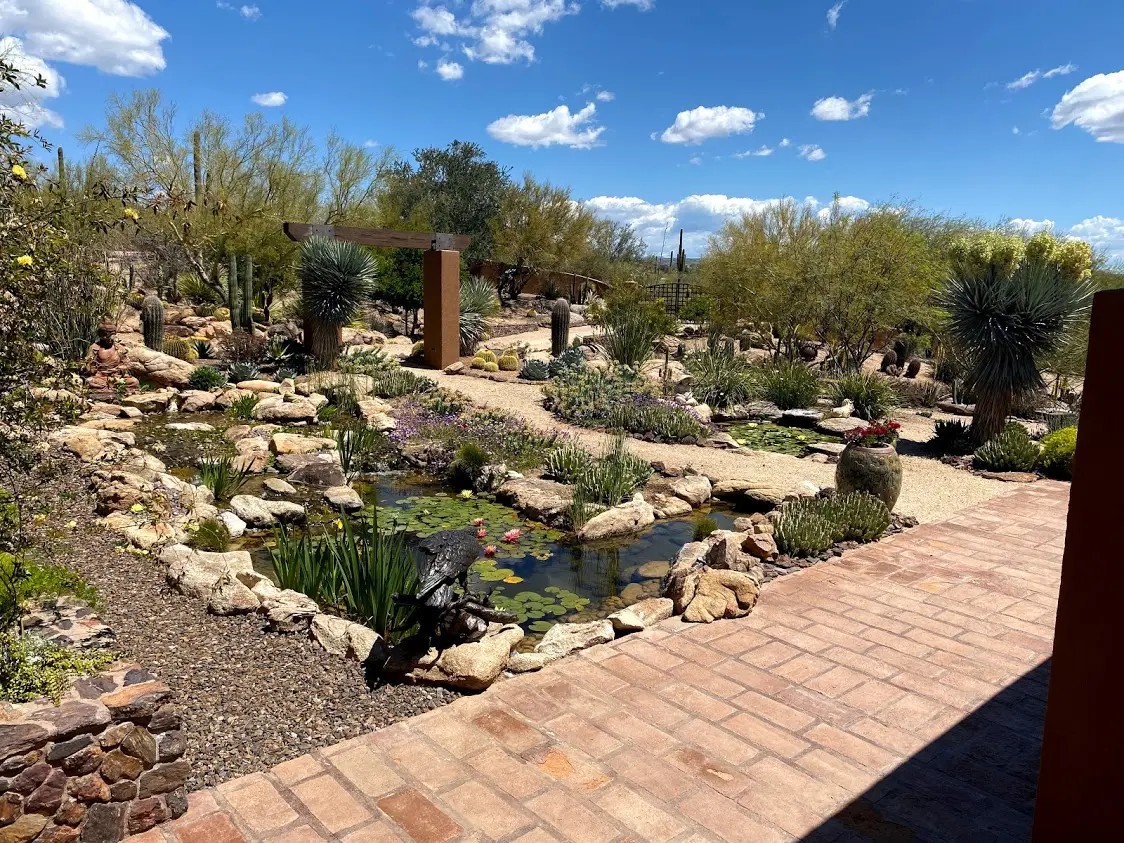
Rather than recreating a tropical oasis, many designers recommend a desert-modern aesthetic. Natural stone, rusted steel, decomposed granite, and native plants can help a water feature feel included in the landscape.
 For Lancaster, native vegetation should play a much bigger role. He believes homeowners often underestimate how beautiful and functional desert-adapted landscapes can become when rainwater harvesting is built directly into the design.
“Rain gardens maximize the capture and reuse of free on-site waters such as rainwater, stormwater runoff, household grey water, and air conditioning condensate. Rain gardens infiltrate those waters into the soil where mosquitoes cannot access them,” he said. “The water is stored within the soil. Living plants pump water from the soil through their roots, pump it up through their tissue into their leaves, flowers, and fruit.”
In other words, the landscape itself becomes part of the water management system.
Lancaster also emphasizes the ecological benefits of native trees and plants, particularly in supporting Arizona wildlife.
“A native velvet mesquite tree supports over 60 species of native pollinators,” he said. “But a non-native South American hybrid mesquite planted in the Sonoran Desert can’t support more than 12.”
Balancing beauty and responsibility
Water features can add ambiance, relaxation, and visual interest to a home, but they also require planning and realistic expectations in the desert. Choosing smaller-scale designs, investing in efficient technology, minimizing evaporation, and exploring rainwater harvesting can all help reduce environmental impact.
For some, that may mean embracing pondless fountains or subtle bubbling features tucked into shaded courtyards. For others, it may mean rethinking the idea of a water feature entirely and investing instead in native shade trees, rain gardens, and living landscapes that naturally support cooling and biodiversity.
These 2 approaches reflect different ways of connecting with water in a place where every drop matters.
Holdeman believes well-designed water features can still bring value to daily life when approached the right way. At the same time, Lancaster encourages homeowners to think long-term about what truly belongs in the desert.
Ultimately, the most successful landscapes are those that respect the realities of the desert while still offering an outdoor space where people want to spend time.
###
Homeowner Handbook | #WaterFeature
PODCAST
PHOTO CREDIT
- The Pond Gnome
- Harvesting Rainwater