
Many of us take for granted our ability to navigate our tub or shower. For some, that ability becomes compromised as we age, or some infirmity takes hold. We wanted to explore the options available to help us continue to move about on our own. We turned to Rosie Certified Partner, Derek Rogers of Aqua Therapy Tubs to help us understand the options available. “When people call us for a walk-in tub, there are usually other accessibility issues that need to be solved as well. We want to be sure all our client’s needs can be addressed seamlessly.”
Safety is an overriding concern. According to the CDC, 3 million Americans end up in the emergency room from a fall each year. Three- fourths of all falls occur inside by slipping or tripping. Falls in the bathroom have the highest risk of injury.
Derek tells us that dignity is also an issue for folks who have limited mobility. He helps us outline the additions we can make for a safer and more accessible bathroom that allows for dignity.
Tubs
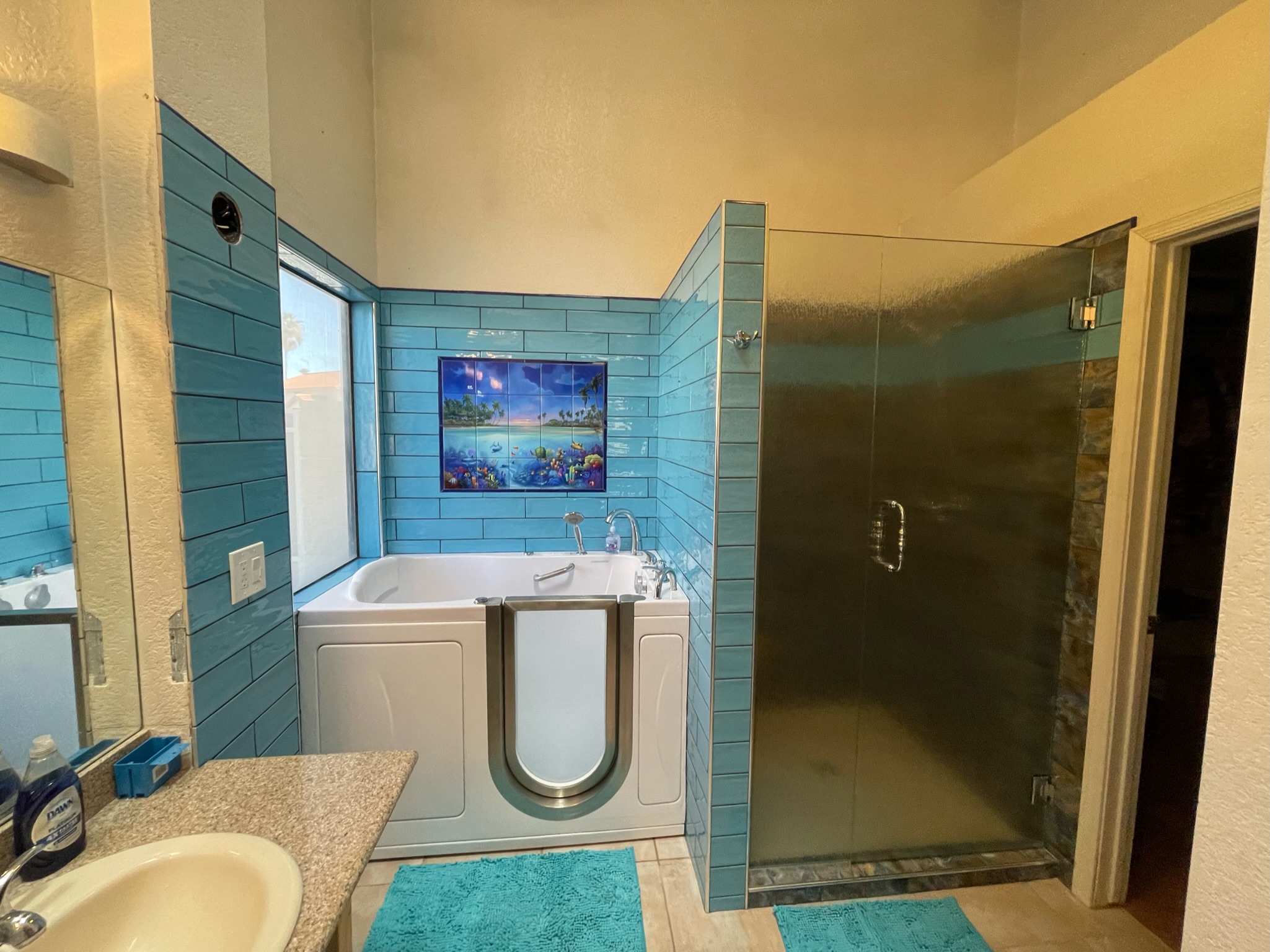
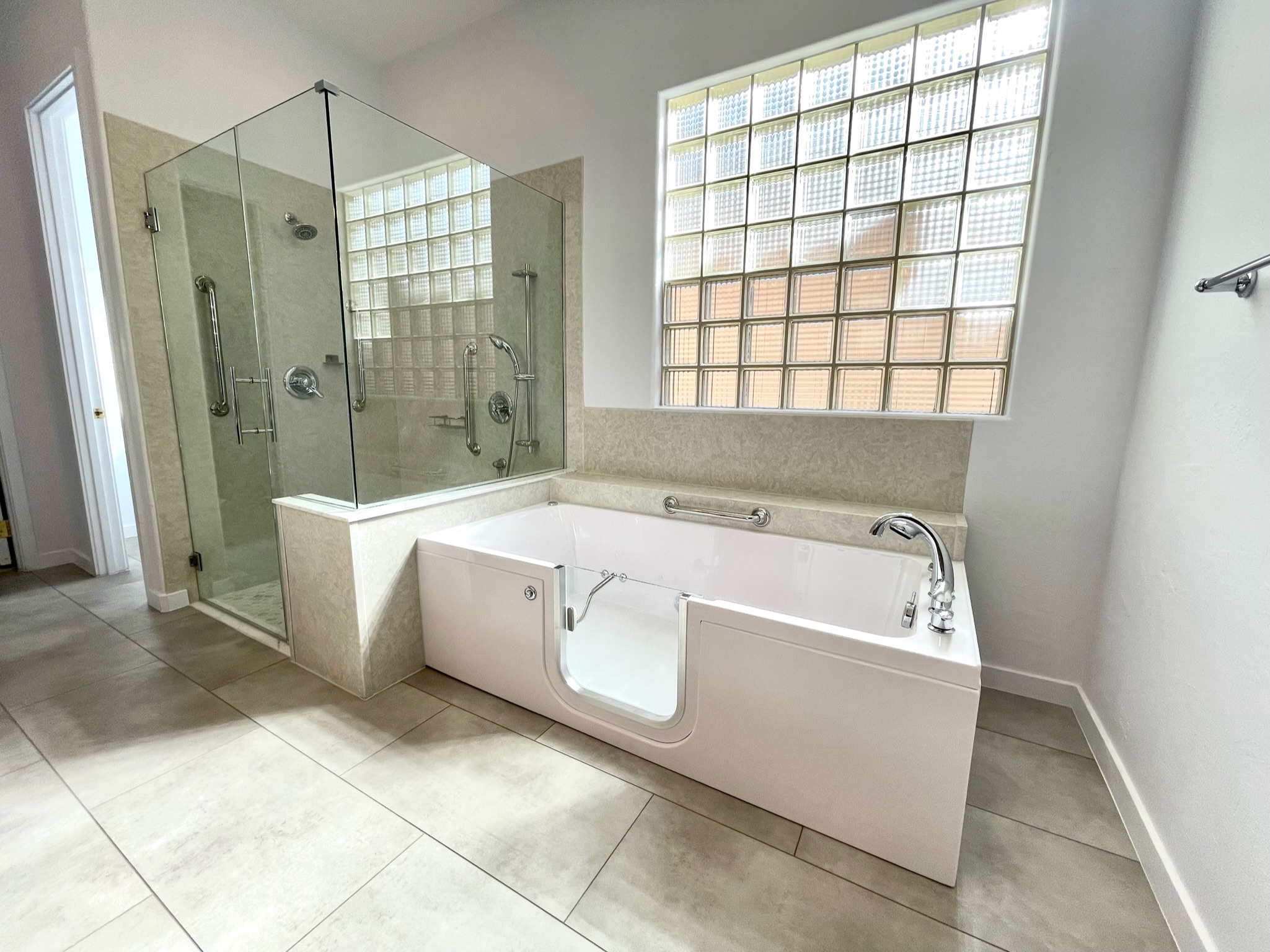
Negotiating the step into the tub is difficult for some. For those who do not want to forgo bathing Derek tells us more about walk-in tubs. A sealable door on the side allows a small step into the tub. The tub is deeper than a standard tub so one can sit on a bench and avoid getting up and down. Hand holds help a person maneuver safely to a sitting position.
Showers
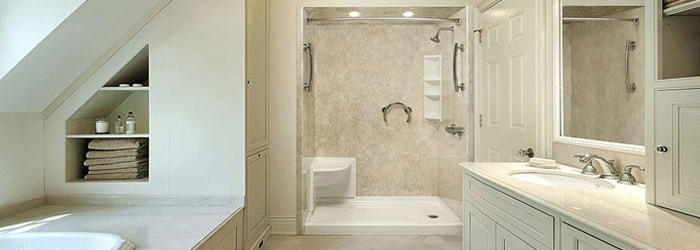
A typical step of approximately 4 inches may not seem like a huge impediment unless you are in a wheelchair or use a walker. This is where a zero-entry shower is a great help. Zero entry means there is no raised threshold to the shower area. Sloping the shower floor to direct water into a drain is necessary. Once in the shower, a fold-down seat is commonly used to accommodate folks who can’t stand. Hand-held and adjustable shower heads are used to make self-bathing more convenient.
Toilets
A higher toilet helps those who have difficulty lowering and rising. A standard toilet height is between 14 to 15 inches measured from the floor. A more accessible height is 17 to 19 inches. There are special seats that can make the toilet even higher if needed.
Grab Bars
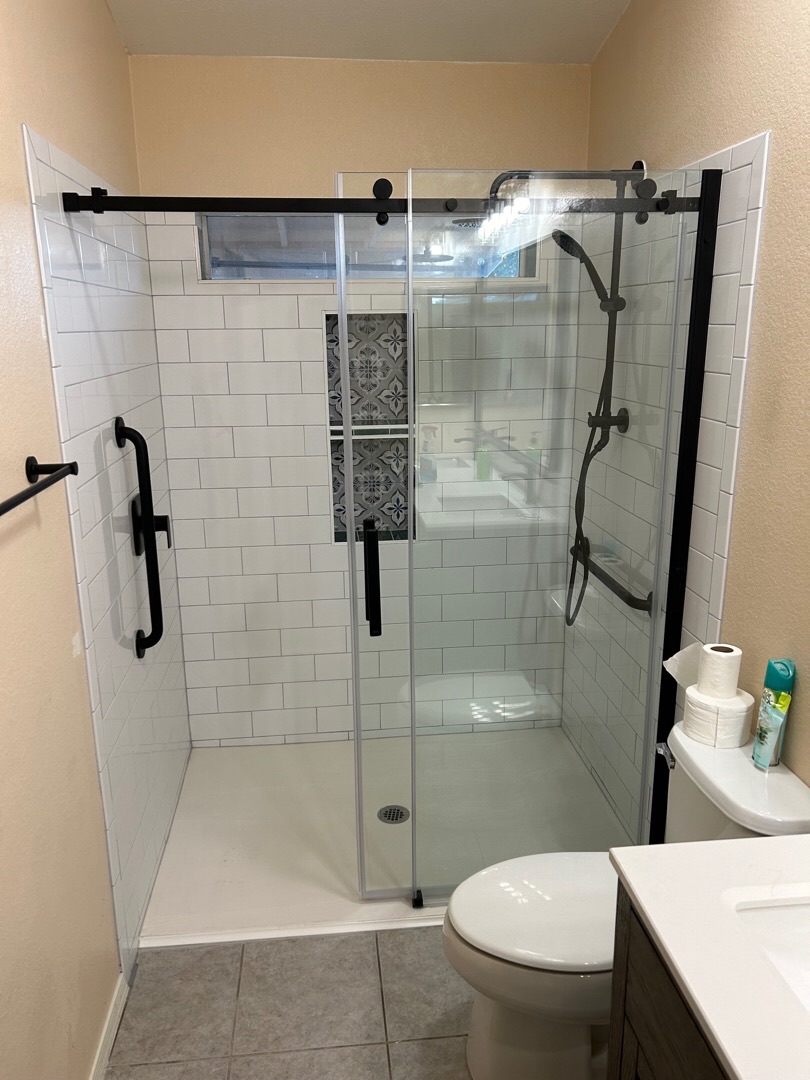
Derek tells us no accessible bathroom should be missing grab bars. Grab bars have many finishes to choose from and are no longer hospital -like in appearance. There are several ideal locations for placement depending on individual needs, where grab bars are placed for greater safety and accessibility. One bar at the Toilet area is a must and it is helpful to have two grab bars to allow an individual to transfer from a wheelchair to the toilet seat. The entry into a shower, and in the shower itself, will have as many as three bars, both vertical and horizontal, to help folks maintain stability and prevent falls. The configuration of the grab bars depends on individual needs.
Sinks
Wheelchair access for a sink requires a clear area below the sink. Derek typically utilizes a wall-hung freestanding sink to accommodate wheelchair folk. Faucets with paddle-shaped handles are used for people who cannot use grab or twist-style handles. In addition, the plumbing configuration moves the typical P trap closer to the wall and all piping is insulated to avoid the possibility of scalding.
Flooring
Wet floors, slipping, and falling are common accidents in most bathrooms. When someone is disabled or unsteady, that concern is heightened. Derek recommends slip proof flooring. He likes a luxury vinyl flooring called Lifeproof. For people who prefer the look of tile, many tiles come with a rougher surface that make them less slippery. Other ways to improve a tile service are to make smaller grout lines or to apply a chemical called Slip Dr that chemically etches the surface of the tile.
Accessible design is not just for us as we age. A good many of the disabled population are our veterans. One of Derek’s clients is a 22-year-old veteran who was made a quadriplegic by an IED. The solution for this man’s bathroom was to make the entire bathroom waterproof. There are no barriers on the floor and no curtain or shower barriers either.
Veterans Program
Derek tells us about a Veterans Administration programed designed to help disabled vets get up to $6,800 to adapt existing homes, including bathrooms, for the vet. The program is called Home Improvement & Structural Alterations, or HISA for short. A vet wanting to take advantage of this program begins by contacting his or her primary care physician at the VA. If qualified by the doctor there is an application process that can take up to 6 months to muddle through. Aqua Therapy Tubs has streamlined that process by working with the VA to be able to assist Vets get through the online paperwork in as little as 2 months. This is a great service to our vet’s worthy of applause. We are proud to have Derek as a Rosie Certified Partner.
###
CONTENT PARTNER | Aqua Therapy Tubs
Derek Rogers formed Aqua Therapy Tubs out of a need he saw in his own family. Aqua Therapy Tubs provides a full service install to making your bath or shower accessible to all. With a care for comfort and dignity in every home, Derek offers a wide range of products to help a variety of needs.
PODCAST
Function & Accessibility In The Bathroom | Podcast Archive With Expanded Content and Resources
PHOTO CREDIT
- Aqua Therapy Tubs