
A well-designed entryway, front door or back, sets the mood for the rest of the home, but it also has an important job. It’s where backpacks, purses, keys, sunglasses, shoes, and mail often land the moment you walk through the door. Without a space of their own, those everyday essentials can turn into clutter – but a little creativity and smart storage will help even the smallest entryway become an organized, welcoming space.
Work with what you’ve got
According to Christine Cox of BC Renovations, a Rosie on the House Certified Partner, functionality begins with making sure the entryway remains easy to use.
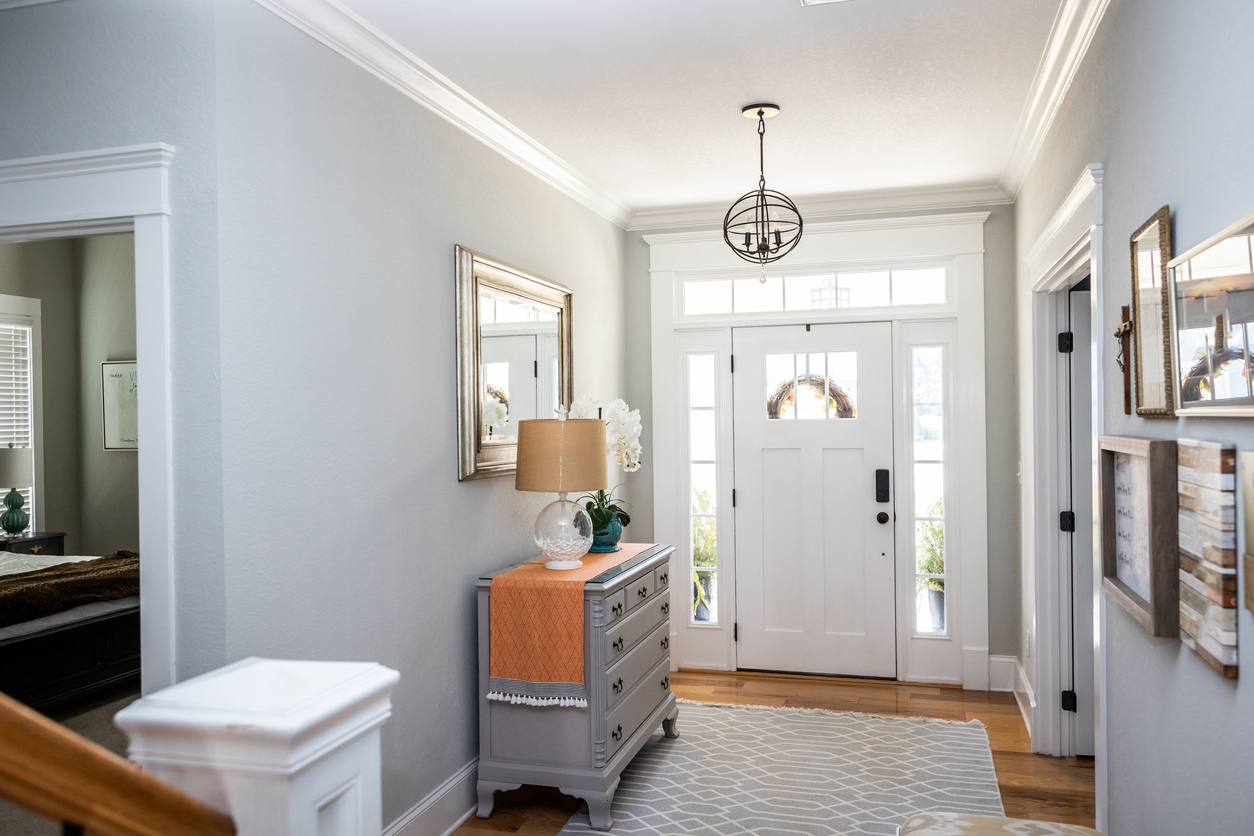
“No one wants to walk into a home and be greeted by the family’s items that have ‘collected’ over time. There needs to be room to enter and exit freely. Sometimes the drop-off zones are at the garage entry door or a back door,” Christine said. “It’s always nice to have something to set your items on, such as a countertop, bench, small table, or cabinet.”
The goal is to create a dedicated landing spot without sacrificing the flow of the entrance. One of the easiest ways to keep an entryway organized is by assigning every item its own home. Christine recommends simple storage solutions that combine function and style.
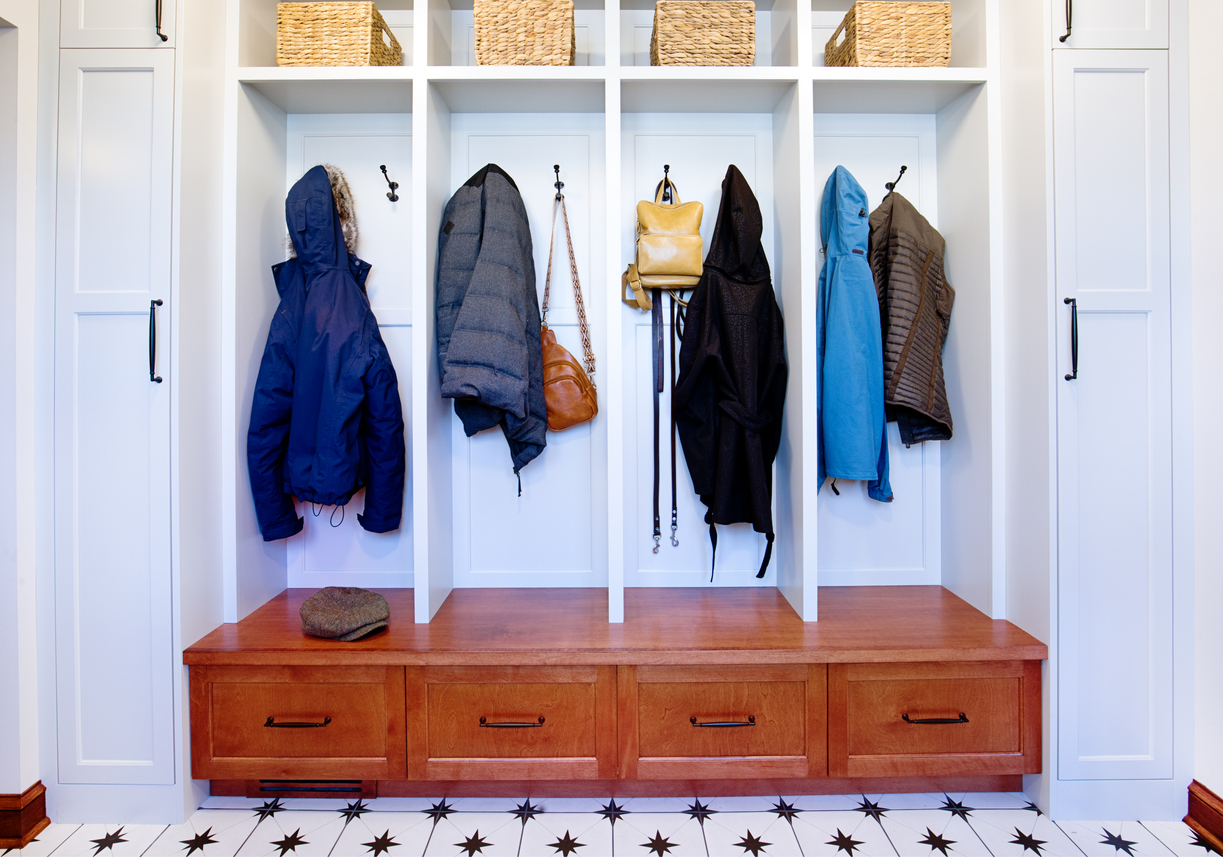
“Add baskets or decorative bowls to collect items. If your space allows for furniture or built-in cabinetry, drawers are great! I have installed charging drawers for customers to store their small electronics in,” she said. “Larger drawers can hold shoes, jackets, purses, etc.”
Organization expert Laura Voight of Get Organized with Bridges recommends keeping only the true daily essentials within arm’s reach. She has a simple rule for corralling smaller items that corresponds with Christine’s vision: the 3 Bs, also known as baskets, boxes, or bowls.
Make the most of small spaces.
Limited square footage doesn’t have to restrict organization. For compact entryways, Christine suggests thinking vertically and choosing furniture that works harder.
“Depending on the size of the entryway, a narrow table with a shelf below or a cabinet with doors to hide items is helpful,” she said. “Maybe a decorative shelf attached to the wall and a couple of fun coat hooks behind the door will help make the space functional. A mirror is always nice too, making a small space appear bigger and bringing more light in.”
Laura said homeowners are often surprised by how much function they can fit into a compact entryway.
“Size matters. You can get more done than you think with 8-12 inches of depth. There are nice console tables that can accommodate a few drawers for keys and glasses. I am a big believer in hooks,” she said. “They don’t take up much space and are really functional. A bench is always good, and storage is a big bonus! One thing, though, is to make sure you don’t buy furniture that is too big for the space.”
Get creative with storage
Sometimes the best storage solutions are custom ones. Christine recalls one project where an underutilized architectural feature became a practical storage area.
“I had a customer with a ’round rotunda’ style entryway with a floor-to-ceiling recessed niche. To help make the space more functional, we did a custom slab ledge/tabletop to fit inside the curved niche. Two small ottomans with removable tops were placed under the custom ledge for additional storage. It gave the niche purpose and was attractive.”
Looking at your home’s existing features with fresh eyes can often reveal opportunities to add storage without major renovations. Staying organized also comes down to building habits that support the system you’ve created.
“Give it a home, then put it in its home,” Laura said. She notes that not everything has to stay in the entryway, either. “You can also expand into other rooms. For example, my mail goes straight to the office. My keys go in a bowl right outside my entry so it’s not too crowded.”
Storage should support your style – not compete with it. Don’t be afraid to rethink how you can utilize an item. The key is not to allow clutter to collect or overflow. If everything has a proper place to land, and that space is maintained, your entry should always be presentable.
*Rosie Tip: Family Drop Zones should have the same rules as the Office refrigerator, if something starts smelling or overstays its welcome in one spot where it doesn’t belong, it goes to the trash.
Simple design ideas that work.
Katie Jaydan of Rosie Right Design Build agrees that the best entryways combine practicality with design. She recommends starting with a “beautiful, functional piece of furniture, either freestanding or built-in, that can be functional and decorative.”
For smaller spaces, Katie suggests choosing “anything that has the appearance of being light and open…shelves with baskets, furniture on feet, light in color.” She also said that adding decorative elements like pictures or plants can make the entryway into an “inviting intro” to the rest of the home.
A note on security
A beautiful front entry should also be secure. Protecting deliveries starts with a few habits, including leaving clear delivery instructions, requiring a signature, shipping packages to a secure pickup location or locker, and staying alert to suspicious activity. Motion-activated lighting, secure drop boxes, and tools like Nextdoor or Amazon Key can also help reduce the risk of package theft.
Home security extends beyond your deliveries. Reinforcing exterior doors and locks, improving outdoor lighting, securing windows, and using cameras or smart monitoring systems can help make your property less appealing to thieves. Avoid opening the door to strangers or hiding spare keys outside, as these are often the first places burglars look.
Whether you’re working with a spacious foyer or a narrow stretch of wall beside the front door, a stop-and-drop zone can make everyday life a little easier. When everything has a designated place, from your keys and shoes to your latest online order, you’ll spend less time searching for misplaced essentials and more time enjoying your home – organized messes and all.
###
Homeowner Handbook | #AzDropZone
PODCAST
PHOTO CREDIT
- Istock